
Products
Our comprehensive product portfolio includes a wide range of brass rods (including low-lead and lead-free grades), brass fittings, and pipe components, engineered for exceptional mechanical strength, corrosion resistance, and machinability across plumbing, HVAC, automotive, and industrial applications.
Compression Tee Fitting Factory Direct for Dependable Pipe Connections
In complex fluid control systems, creating reliable branch points is essential for distributing flow between multiple pipelines. Compression Tee Fitting is designed to connect three tubing sections at a single point, allowing one pipeline to split into two directions or enabling multiple lines to be integrated into one controlled flow path.
NINGXING provides precision-engineered tube connection components for hydraulic, pneumatic, instrumentation and industrial piping applications. Supported by advanced machining equipment and strict quality management procedures, NINGXING products are manufactured under ISO9001:2015 standards and comply with CE and RoHS requirements to meet international market expectations.
Unlike welded branch connections, the compression structure uses mechanical tube gripping technology. Through the Copperation of the fitting body, ferrules and compression nuts, each tube end forms an independent sealing point, providing stable performance in systems requiring vibration resistance, easy maintenance and accurate flow distribution.
Connection Structure
A Compression Tee Fitting normally consists of a central tee body with three tube connection ports. Each port contains a compression mechanism that secures the inserted tube and creates a sealed connection through controlled ferrule compression.
The three-port structure allows engineers to design compact piping layouts without adding additional elbows, adapters or welded branch components. By reducing connection points, the overall system design becomes simpler while minimizing potential leakage sources.
Depending on installation requirements, the branch outlet can be positioned according to pipeline direction, equipment layout and flow distribution requirements, making it suitable for customized industrial piping arrangements.
Configuration Options
Equal Tee Type
The equal tee configuration features three identical tube connection ports. It is mainly used when the main pipeline and branch line require the same tube diameter.
This type is commonly selected for symmetrical flow distribution systems, including pneumatic manifolds, instrument air lines and general industrial tubing networks.
Reducing Tee Type
The reducing tee configuration combines different tube diameters within one fitting body. The main pipeline can maintain a larger flow capacity while the branch port connects to a smaller control or supply line.
This design reduces the need for separate reducers and additional connection points, making it suitable for compact equipment piping and fluid control systems.
Tube to Thread Tee Type
This configuration integrates compression tube ports with a threaded connection interface. It enables tubing systems to connect directly with valves, pressure gauges, regulators or other threaded components.
Available thread options may include BSP, NPT and metric standards according to equipment requirements and customer specifications.
Bulkhead Tee Type
The bulkhead design allows the fitting to be mounted through panels, tanks or equipment walls. It provides a fixed three-way connection point between separated piping areas.
This structure is frequently used in compact hydraulic units, testing equipment and control systems where space optimization is important.
Flow Distribution Design
The main value of a Compression Tee Fitting is not only connecting three tubes, but also creating a controlled flow distribution point within a piping system. During system design, engineers need to consider the relationship between the main pipeline and branch pipeline to maintain stable pressure, flow balance and equipment performance.
For equal diameter systems, the tee connection allows similar flow capacity through all three ports. For reducing configurations, the larger ports are generally used for the main flow path while the smaller port functions as a branch outlet for instruments, control devices or secondary circuits.
Compared with using multiple separate adapters, a tee structure reduces the number of connection joints and simplifies pipeline arrangement. Fewer connection points can help reduce installation complexity and provide easier inspection during equipment maintenance.
Selection Factors
Tube Compatibility
Selecting the correct tube specification is the first consideration when choosing a compression tee connection. The fitting must match the tube outside diameter accurately to ensure the ferrule can generate sufficient gripping force.
Common tube materials include copper, stainless steel and other metal tubing. The tube hardness, wall thickness and surface condition can influence connection performance, especially in high-pressure or vibration environments.
Pressure Requirement
Different piping systems operate under different pressure conditions. Low-pressure pneumatic systems, instrumentation lines and high-pressure hydraulic circuits require different fitting structures and material selections.
For demanding applications, double ferrule designs or higher-strength materials can provide enhanced resistance against vibration, pressure fluctuation and repeated temperature changes.
Media Compatibility
The transported medium is another important factor affecting product selection. Brass compression tee fittings are widely used for water, air, oil and general industrial fluids due to their excellent machinability and corrosion resistance.
For aggressive chemical environments or special industrial processes, stainless steel or customized alloy materials may be selected to improve corrosion resistance and service reliability.
Manufacturing Precision
NINGXING applies professional machining processes and strict inspection standards throughout the production of tube connection components. Accurate machining of the tee body, ferrule contact surface and thread area directly affects sealing consistency and connection reliability.
The production process focuses on maintaining dimensional accuracy, smooth internal passages and stable component matching. Each critical dimension is controlled according to customer requirements and international fitting standards.
With advanced manufacturing capability, NINGXING supplies Compression Tee Fitting solutions for customers requiring reliable performance, consistent quality and long-term operational stability.
Typical Applications
Instrumentation Pipeline
In measurement and control systems, tee connections are commonly used for distributing instrument air, sampling lines and pressure monitoring circuits. The compact structure helps create organized tubing layouts around instruments and control panels.
Hydraulic Systems
Hydraulic equipment often requires multiple control branches for actuators, valves and monitoring devices. Compression tee connections provide a reliable method for creating branch circuits without welding operations.
Pneumatic Equipment
Compressed air systems use tee fittings for distributing air supply between cylinders, valves and automation components. The mechanical connection method allows efficient installation and convenient maintenance.
Industrial Machinery
Manufacturing equipment, testing machines and processing systems frequently require compact fluid distribution networks. Tee fittings help connect multiple tubing routes within limited installation space.
Energy and Process Systems
In industries such as chemical processing, power generation and renewable energy equipment, reliable branch connections are required for fluid monitoring, control and auxiliary systems.
Frequently Asked Questions
How should a compression tee fitting be selected for a branch pipeline?
The selection depends on the relationship between the main line and branch line. Equal tee configurations are suitable when all three tubes have the same diameter, while reducing tee configurations are preferred when the branch requires a smaller tube size. The operating pressure, tube material and installation environment should also be considered.
Can compression tee fittings be reused after maintenance?
A compression tee fitting may be reused if the fitting body, ferrule and nut remain in good condition. Before reassembly, all components should be inspected for deformation, scratches or damage. If the ferrule sealing edge has been significantly affected, replacing the ferrule is recommended to maintain connection reliability.
What are the common reasons for leakage in tee connections?
Leakage may result from incorrect tube size selection, improper tightening, damaged ferrules, contaminated sealing surfaces or tube deformation. Proper tube preparation and correct assembly procedures are important to achieve stable sealing performance.
What is the difference between equal tee and reducing tee structures?
An equal tee provides the same connection diameter on all three ports and is mainly used for balanced flow distribution. A reducing tee combines different port sizes in one body, allowing a smaller branch connection without installing an additional reducer. The choice depends on the required flow capacity and system layout.
- View as
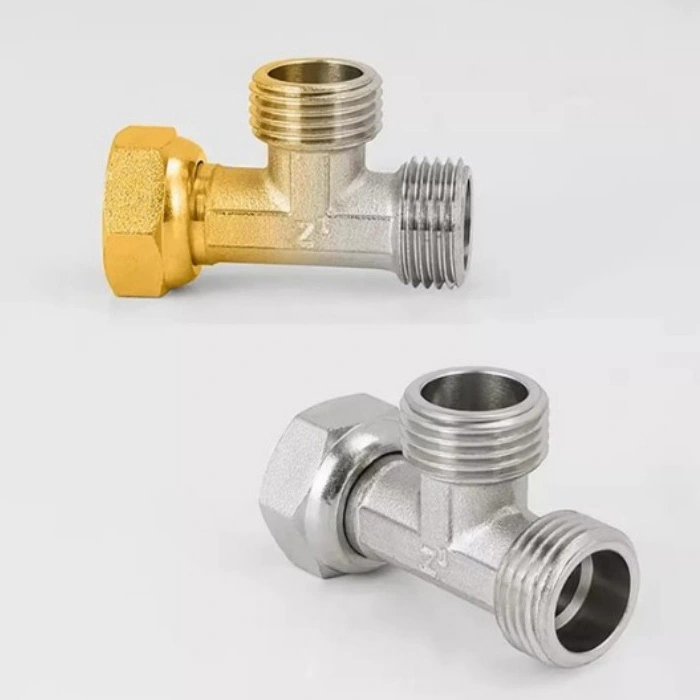
Water Pipe Tee Connector
NINGXING Water Pipe Tee Connector is designed for reliable branch connections in water supply, HVAC, plumbing, equipment piping, and renovation projects. Made from high-quality brass and manufactured through forging and CNC machining, it combines mechanical strength, corrosion resistance, accurate threading, and dependable sealing.
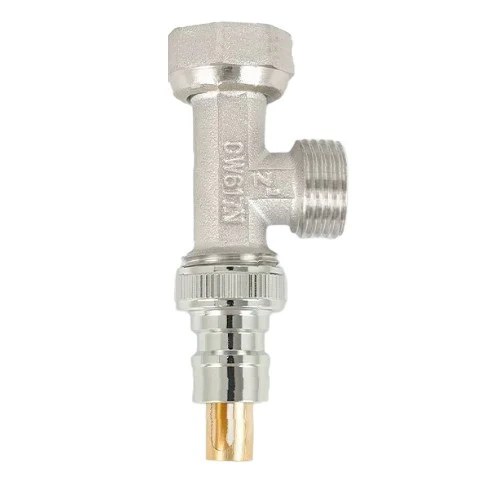
Toilet Water Splitter Valve Tee
The NINGXING Brass Toilet Water Splitter Valve Tee is designed for reliable water distribution in toilet, bathroom, and residential plumbing systems. Manufactured from high-quality brass with a reinforced valve body structure, it provides excellent pressure resistance, corrosion protection, and long-term leak prevention compared with ordinary plastic or zinc alloy alternatives.
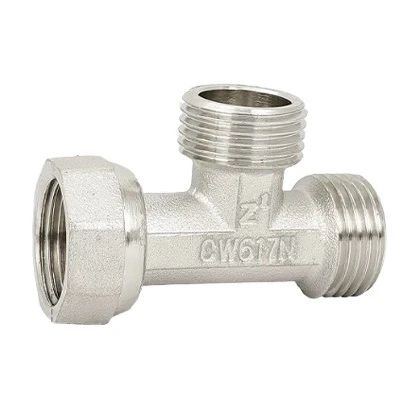
Faucet Water Splitter Tee
The NINGXING Faucet Water Splitter Tee is designed to solve common water connection challenges where one existing outlet needs to supply multiple devices or fixtures. With a compact two-way distribution structure, it allows a single water source to be expanded into separate outlets for faucets, washing machines, dishwashers, cleaning equipment, and other plumbing applications.
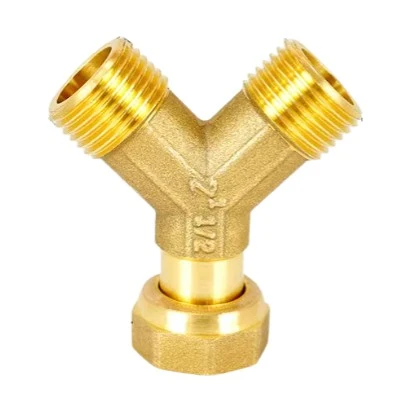
Washing Machine Water Divider Tee
The NINGXING Washing Machine Water Divider Tee is a durable brass fitting designed to split one water supply into two independently controlled outlets. With a chrome-plated brass body and ceramic valve cartridges, it offers reliable shut-off performance, corrosion resistance, and easy connection for washing machines, faucets, laundry equipment, and utility sinks. Available in common 4-point and 6-point sizes, it supports OEM customization, private-label packaging, and bulk supply.
NINGXING is a professional Compression Tee Fitting manufacturer and supplier in China. We warmly welcome you to wholesale high quality products at competitive price from our factory.