
Products
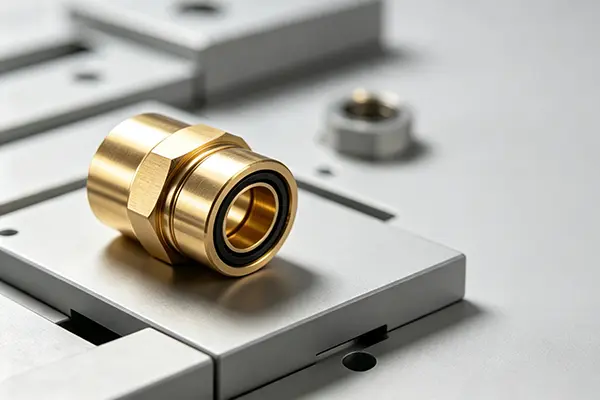
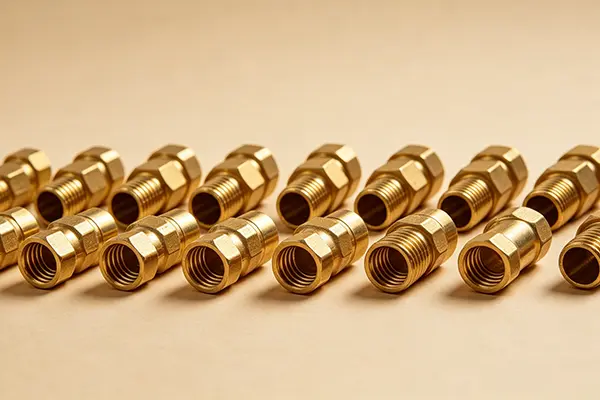
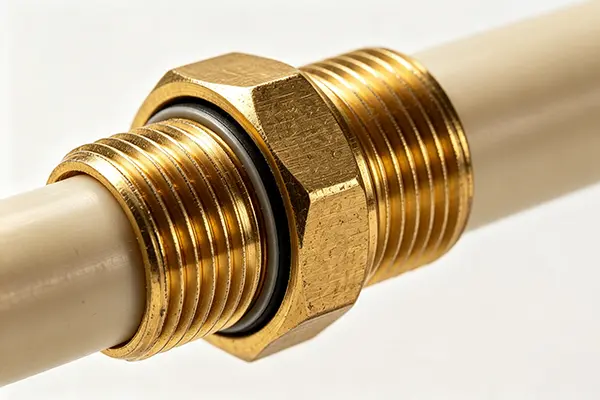
Our comprehensive product portfolio includes a wide range of brass rods (including low-lead and lead-free grades), brass fittings, and pipe components, engineered for exceptional mechanical strength, corrosion resistance, and machinability across plumbing, HVAC, automotive, and industrial applications.
Factory Direct Hot Forging Components for Heavy-Duty Industrial Applications
NINGXING is a professional Supplier and Factory specializing in customized metal forming for piping hardware, valve components, mechanical parts, and industrial fittings. With an in-house hot forging production line, NINGXING provides integrated manufacturing services covering metal bar preparation, heating, die forming, trimming, machining, surface treatment, and final inspection.
Hot Forging is a high-temperature metal forming process in which a metal billet is heated to a suitable forming temperature and pressed into a prepared die cavity. The process improves material compactness and enables the production of components with complex external profiles and internal structures. It is particularly suitable for valves, pipe fittings, nuts, connectors, and other parts requiring reliable mechanical properties and pressure resistance.
NINGXING supports different production requirements through copper, steel, aluminum, and other metal forming processes. Customers can select suitable process routes according to material grade, component geometry, dimensional requirements, order quantity, and subsequent machining requirements.
Material-Based Processing
Copper and Brass Forming
Copper and brass are widely used in piping hardware, valve bodies, connectors, and electrical components because of their combination of strength, corrosion resistance, and machinability. NINGXING can process materials such as HPb59-1 and C36000 according to component requirements and customer drawings.
For complex brass components, proper billet preparation and heating control are important for achieving consistent die filling. Material selection can also be adjusted according to the final application, machining requirements, pressure conditions, and surface treatment.
Steel and Aluminum Forming
Steel and aluminum are suitable for structural and mechanical components that require different combinations of strength, weight, and durability. Steel forming can be used for pressure-bearing and load-bearing parts, while aluminum provides a lighter option for applications where weight reduction is important.
NINGXING can recommend suitable material grades according to the product drawing and working environment, helping overseas buyers balance material performance, manufacturing difficulty, and overall production cost.
Part Geometry and Die Design
Complex Hollow Components
One important characteristic of the process is its ability to form components that would otherwise require multiple manufacturing operations. With suitable die structures and core-pulling mechanisms, NINGXING can produce hollow or partially hollow components such as multi-way pipe fittings and valve bodies.
This capability is particularly useful for copper valve bodies, three-way fittings, and other components where internal cavities or branch structures are required. Proper die design allows the material to flow into complex cavities while maintaining the required wall thickness and overall geometry.
Die Development for Custom Parts
For customized components, die development is determined by the part geometry, material, forming temperature, required tolerances, and production volume. NINGXING uses hot-work die steel with appropriate heat treatment to improve resistance to thermal cycling and repeated forming loads.
For standard production conditions, a properly designed die can support tens of thousands to hundreds of thousands of forming cycles. Die construction and service life are evaluated according to the actual material and production conditions rather than using one fixed specification for every project.
Production Method Selection
Single-Machine Production
Single-machine production is suitable for customized orders, medium-volume projects, and products requiring flexible production arrangements. Automatic feeding systems can be integrated with conventional forming equipment to reduce manual handling and maintain consistent production conditions.
This production method provides flexibility when customers require several product specifications or when production quantities do not justify a fully automated line.
Automatic Warm Forming
For high-volume orders, NINGXING can use automated forming equipment to integrate material feeding, heating, forming, and part removal into a continuous production process. Automated operation helps improve production consistency and reduce labor-dependent handling.
Depending on component size, material, and machine configuration, automated production can achieve approximately 50 to 100 pieces per minute for suitable small components. Actual output is determined by the product geometry, forming sequence, and quality requirements.
Heating and Forming Control
Temperature Management
Heating temperature has a direct influence on material flow, die filling, surface condition, and forming stability. Copper materials are commonly heated within approximately 600°C to 700°C, while steel materials generally require higher forming temperatures depending on their composition and application.
Heating time is normally adjusted according to billet diameter, weight, material type, and equipment configuration. Excessive heating should be avoided because overheating may cause grain growth or other material changes that affect final component performance.
Pressure and Forming Parameters
Equipment selection depends on billet dimensions, part weight, geometry, and forming resistance. Typical forming equipment may operate within a pressure range of approximately 60 kN to 300 kN, while the actual machine capacity should be determined through engineering evaluation of the specific component.
During production, forming force, die alignment, billet temperature, lubrication, and cycle time need to be controlled together. Stable process parameters help reduce dimensional variation and improve repeatability between production batches.
Post-Forming Machining
Machining Allowance
Although the forming process can achieve relatively close-to-final component geometry, critical functional surfaces normally require additional machining. Thread holes, sealing surfaces, mounting faces, and precision connection areas may require machining allowances of approximately 0.5 to 1.5 mm depending on the component design.
NINGXING can coordinate the forming process with subsequent CNC turning, drilling, tapping, milling, and other machining operations to produce finished components according to customer drawings.
Dimensional and Surface Requirements
Typical formed components can achieve approximately Grade 6 to Grade 7 dimensional accuracy under suitable production conditions, while surface roughness may reach approximately Ra 6.3 to 12.5 μm depending on the material, die condition, and process parameters.
For components with strict dimensional or sealing requirements, final inspection is performed after machining rather than relying solely on the dimensions of the formed blank.
Application Fields
Valves and Piping Hardware
The process is widely used for copper ball valve bodies, globe valve bodies, gate valve components, check valve parts, pipe connectors, three-way fittings, elbows, union nuts, and reducing bushings.
It is also suitable for water meter housings, filter housings, and pressure-reducing valve bodies. The high material density achieved through controlled forming makes these components suitable for applications where pressure resistance and reliable sealing are important.
Mechanical and Hydraulic Components
In mechanical manufacturing and hydraulic applications, formed components can include pressure gauge connectors, oil pipe fittings, hydraulic valve blocks, and other parts exposed to static pressure or repeated mechanical loads.
Steel or aluminum forming can also be applied to selected automotive and motorcycle components, including steering knuckles and brake brackets, depending on the required material properties and component structure.
Hardware and Electrical Components
For daily-use and architectural hardware, applications include high-end door handles, lock bodies, bathroom accessory bases, and floor drain bodies where dimensional consistency, surface quality, and corrosion resistance are important.
Electrical and communication applications include copper terminals, cable clamps, and explosion-proof cable entry boxes. Copper forming is particularly suitable for components where electrical conductivity and structural integrity are both required.
Custom Manufacturing Service
From Bar Stock to Finished Components
NINGXING provides an integrated manufacturing route from copper or steel bar stock to formed blanks and finished components. This approach allows customers to coordinate material selection, forming, machining, and inspection through one manufacturing partner.
For customized projects, customers can provide drawings, samples, 3D models, material requirements, or application information. NINGXING can then evaluate the forming direction, die structure, machining allowance, and production method before mass production.
Small Batch and Mass Production
The production system supports both medium-volume customized orders and high-volume repeat production. Die development typically requires approximately 15 to 30 days, depending on component complexity, tooling structure, and customer approval requirements.
For projects with multiple specifications, the production method can be adjusted according to order quantity and delivery requirements, helping customers avoid unnecessary tooling and equipment investment.
Frequently Asked Questions
How Does It Compare with Casting and Conventional Forging?
Compared with casting, Hot Forging can reduce common casting-related defects such as internal porosity and shrinkage when the process is properly controlled, while the resulting material structure can provide favorable mechanical properties for pressure-bearing components.
Compared with conventional hot forging, specialized die structures and core-pulling mechanisms can make it possible to produce hollow or branched geometries with less subsequent machining. The actual advantage depends on component geometry, material, production quantity, and quality requirements.
What Machining Is Usually Required After Forming?
Formed blanks may require CNC turning, drilling, tapping, milling, or other finishing operations. Critical areas such as threaded holes, sealing surfaces, and mounting faces normally require machining to achieve the final drawing dimensions.
The required machining amount depends on the forming accuracy and product design. NINGXING can determine suitable machining allowances during the tooling and process development stage.
How Should the Material Be Selected?
Material selection should consider forming temperature, mechanical requirements, corrosion conditions, machining requirements, and final application. For copper components, brass grades such as HPb59-1 and C36000 can be considered for applications requiring suitable high-temperature formability and machinability.
For steel components, carbon equivalent, forming temperature, and heat treatment requirements should be evaluated to reduce the risk of cracking or excessive decarburization during heating. NINGXING can recommend suitable material grades and conduct sample trials based on customer drawings and operating conditions.
- View as
Copper Hot Forging Service
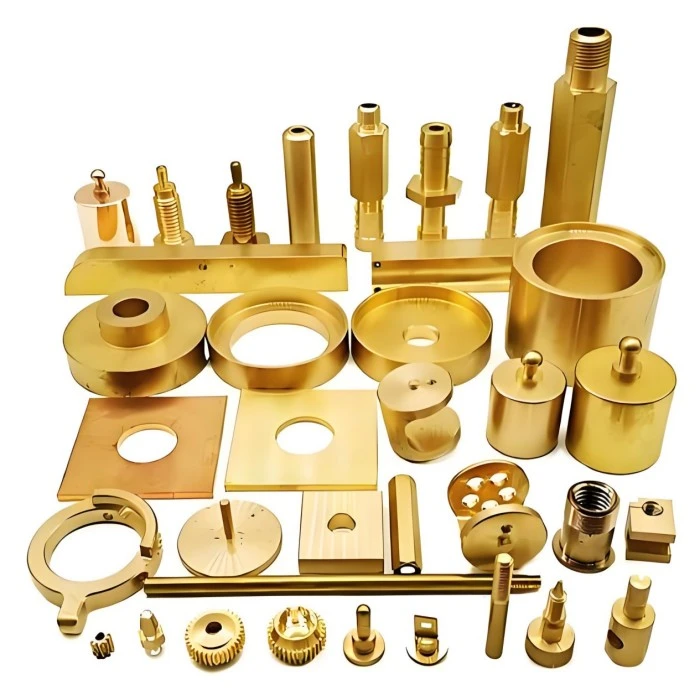
NINGXING provides custom Copper Hot Forging Service solutions for automotive, electrical, marine, machinery, and other industrial applications. With controlled heating, precision die forging, CNC machining, and strict quality inspection, we produce copper alloy components with high strength, good conductivity, and reliable dimensional consistency. Drawing and sample-based customization is supported, with ISO9001:2015, CE, and RoHS compliance for applicable projects.
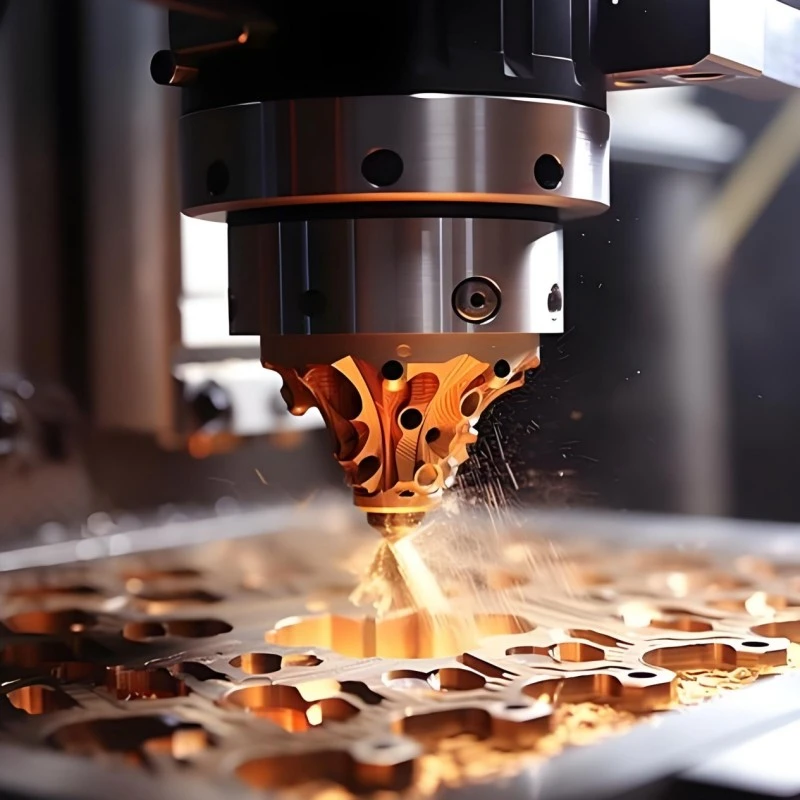
Copper Hot Forged Parts
NINGXING provides custom Copper Hot Forged Parts for valves, automotive components, electrical connectors, power equipment, and sanitary hardware. Using controlled heating, precision die forging, and CNC finishing, we produce dense, high-strength copper alloy components with consistent dimensions and reliable performance. We support drawing and sample-based customization, small-batch trials and volume production, with ISO9001:2015, CE, and RoHS compliance.
NINGXING is a professional Hot Forging manufacturer and supplier in China. We warmly welcome you to wholesale high quality products at competitive price from our factory.