
Products
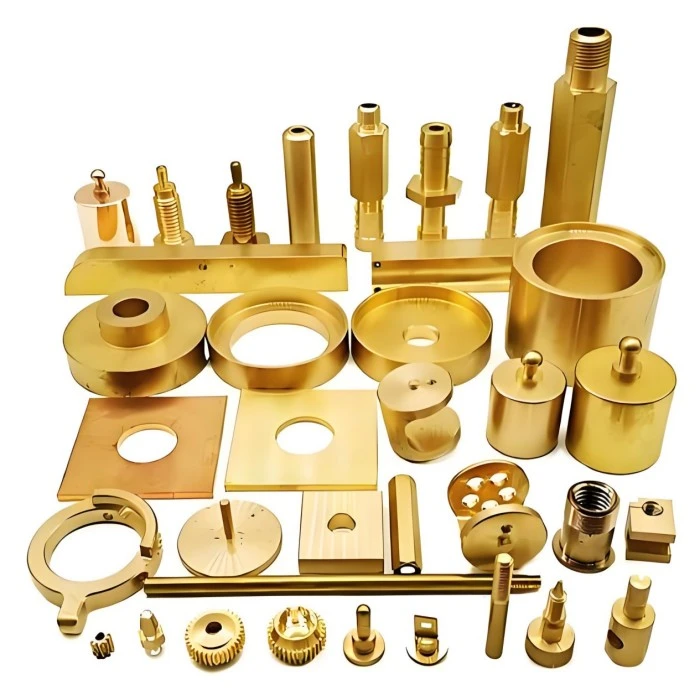
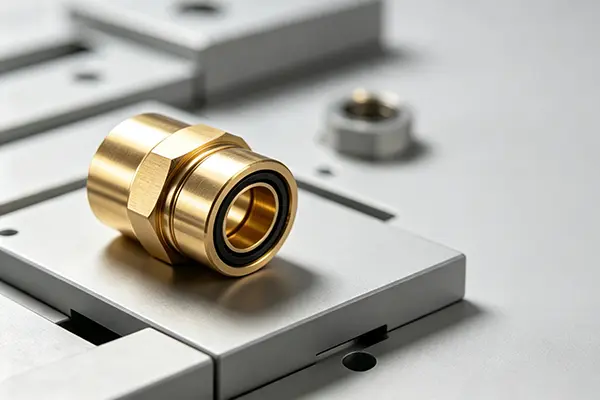
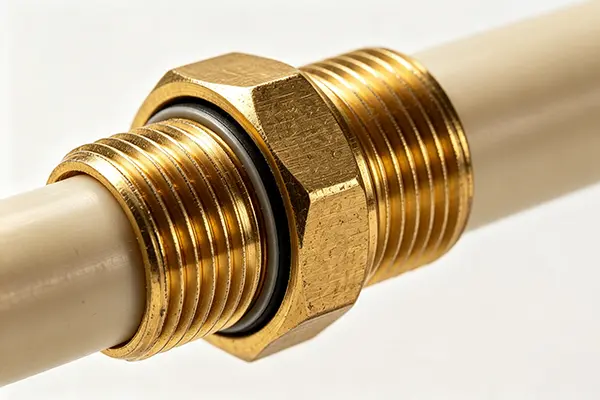
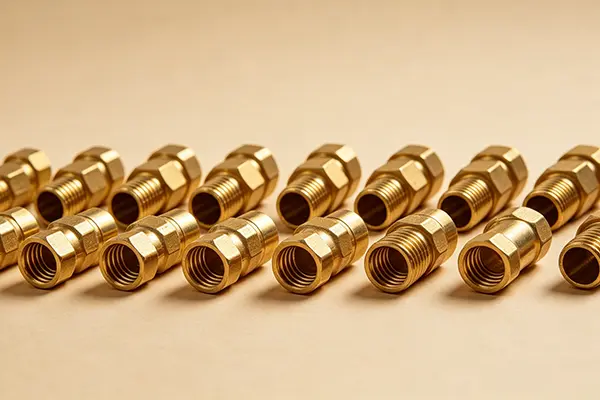
Our comprehensive product portfolio includes a wide range of brass rods (including low-lead and lead-free grades), brass fittings, and pipe components, engineered for exceptional mechanical strength, corrosion resistance, and machinability across plumbing, HVAC, automotive, and industrial applications.
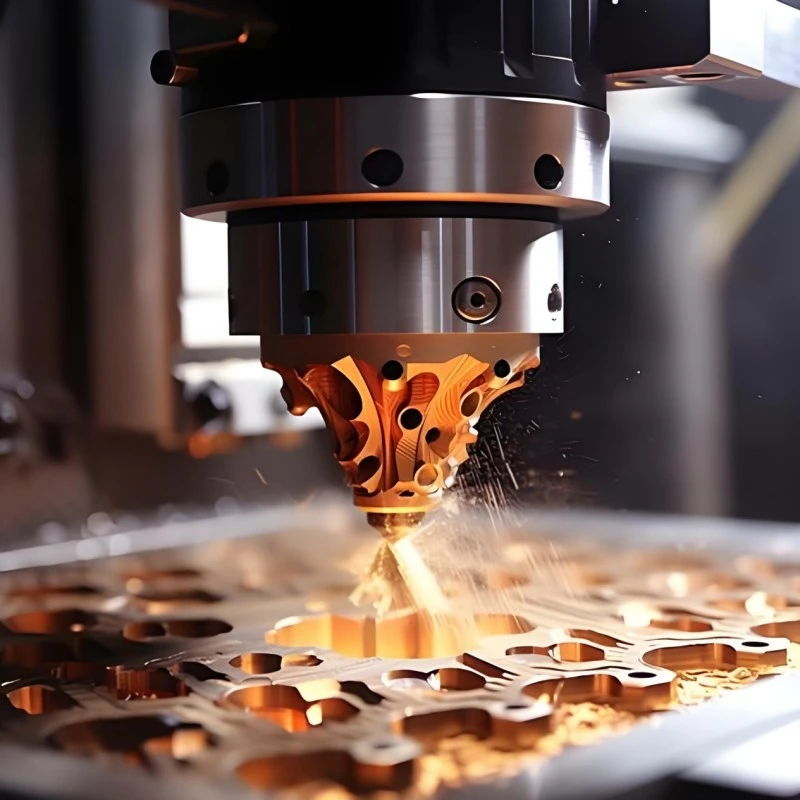
Copper Hot Forged Parts
NINGXING provides custom Copper Hot Forged Parts for valves, automotive components, electrical connectors, power equipment, and sanitary hardware. Using controlled heating, precision die forging, and CNC finishing, we produce dense, high-strength copper alloy components with consistent dimensions and reliable performance. We support drawing and sample-based customization, small-batch trials and volume production, with ISO9001:2015, CE, and RoHS compliance.
Copper Hot Forged Parts are formed by heating copper alloys and applying controlled pressure through die or open-die forging. The process produces a dense structure, refined grain flow, high strength, and excellent conductivity and corrosion resistance.
NINGXING supports custom parts from drawings or samples, covering die design, forging, heat treatment, CNC machining, and final inspection.
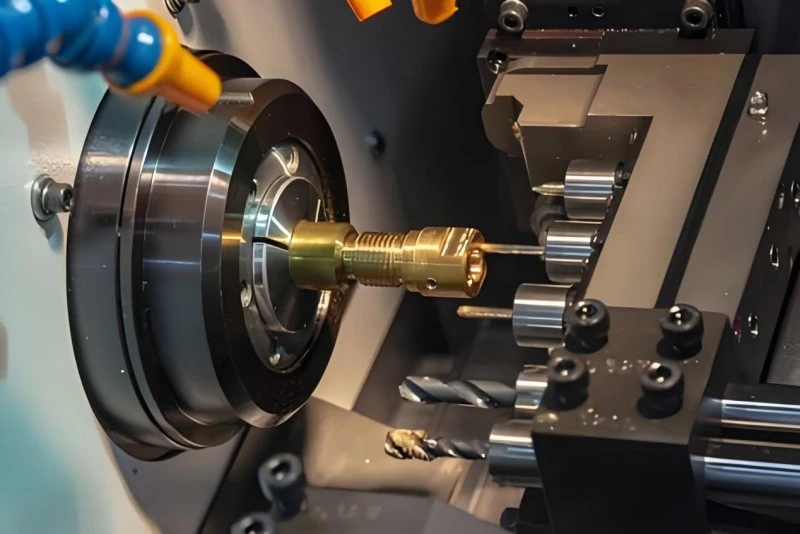
Forging vs. Casting vs. Powder Metallurgy
Process Comparison
| Feature | Hot Forging | Casting | Powder Metallurgy |
|---|---|---|---|
| Strength | High | Medium | Medium |
| Material Density | High | Medium | Medium |
| Precision | High* | Medium | High |
| Material Utilization | High | Medium | Very High |
| Complex Shapes | Good | Excellent | Excellent |
| Production Volume | Medium–High | Low–High | High |
| Typical Applications | Valves, terminals, connectors, auto parts | Housings, valve bodies, complex parts | Small precision components |
| Main Advantage | Strength and structural reliability | Complex shapes | High material efficiency |
*Final dimensional accuracy can be improved through subsequent CNC machining.
For Copper Hot Forged Parts, hot forging is generally preferred when strength, material density, conductivity, and reliability are important. Casting is more suitable for highly complex shapes, while powder metallurgy is often used for small, high-volume components requiring efficient material utilization.
Forging Process
Controlled Heating
Copper alloys have relatively narrow forging temperature windows. Insufficient heating increases deformation resistance and may cause cracking, while excessive temperatures can result in grain growth or overheating defects.
Medium-frequency induction heating is used to maintain controlled billet temperatures. Typical heating ranges are approximately 700–800°C for brass and 850–950°C for copper, with process parameters adjusted according to the specific alloy.
Die Filling and Metal Flow
During closed-die forging, the heated billet is placed into a precision forging die and formed under controlled pressure. Hydraulic forging equipment with capacities of 800T, 1000T, 2500T, and 4000T is available for different component sizes and forming requirements.
Die cavity geometry and forming parameters are adjusted according to the material flow characteristics. This is particularly important for parts with irregular profiles, thick sections, thin features, or complex shapes.
Heat Treatment
Heat treatment can be applied after forging when required by the material specification and mechanical performance target.
Stress-relief annealing can reduce residual stress and improve ductility. For demanding applications, additional solution and aging treatment can be considered to achieve the required hardness and mechanical properties.
Tooling and Secondary Operations
Custom Die Development
The forging die directly affects material flow, dimensional consistency, surface quality, and material utilization. For customized components, the die structure is developed according to the part geometry, draft angle, wall thickness, forging allowance, and expected production volume.
For repeat production, optimized die design can help reduce material waste and maintain consistent part geometry between batches.
CNC Finishing
Forged blanks often require secondary machining to achieve final dimensions and functional features. CNC machining centers and CNC lathes can be used for drilling, tapping, milling, turning, and precision finishing.
Dimensional tolerances can reach approximately ±0.05 mm for suitable machined features, with surface roughness down to Ra 1.6 μm depending on the component design and finishing process.
Internal Defect Inspection
For components used in safety-critical or high-pressure environments, internal integrity is an important purchasing consideration. Ultrasonic testing can be applied to detect internal discontinuities when required.
Electrical components can also undergo resistivity or conductivity testing to verify their functional requirements.
Application Examples
Valve and Fluid Control Components
Copper forged components are commonly used for valve bodies, fittings, connectors, and other fluid-control components in water treatment, industrial piping, and related applications.
Compared with some casting processes, forging can reduce the risk of porosity and improve material density. This is particularly useful for components exposed to pressure where internal defects may affect sealing reliability.
Automotive Components
Copper alloys are used in automotive electrical and mechanical applications where conductivity, wear resistance, and dimensional stability are required.
In one new energy vehicle application, battery terminals were manufactured using a die-forging process. The production rate reached approximately 15 pieces per minute, with a yield above 98%.
Building and Sanitary Hardware
Copper and brass forgings are widely used for sanitary hardware such as door handles, locks, angle valves, and plumbing fittings.
Forging provides a dense material structure and a smooth base surface for subsequent polishing or electroplating. This allows finished hardware to combine mechanical durability with an attractive appearance.
For buyers sourcing Copper Hot Forged Parts for different industrial applications, material selection, forging method, machining requirements, and final inspection can be evaluated according to the specific component design.
Size and Production Range
Standard Forging Dimensions
The production range depends on the material, component structure, forging method, equipment capacity, and required machining allowance.
| Parameter | Reference Range | Notes |
|---|---|---|
| Outer diameter | Φ50–500 mm | Larger dimensions can be evaluated |
| Height | 25–200 mm | Customized dimensions available |
| Single-piece weight | 0.1–3 kg | Heavier components can be evaluated |
| Component size | 50–220 mm | Depends on geometry and equipment |
| Forging equipment | 800T–4000T | Selected according to forming requirements |
The production capability can also cover much larger copper forgings, with individual weights potentially reaching several tons. Final specifications should be confirmed according to the engineering drawing and forging process.
Custom Non-Standard Parts
Non-standard copper forgings can be developed from customer drawings, samples, or 3D models. Complex geometries are reviewed before tooling to determine forging feasibility, material flow, machining allowance, and dimensional requirements.
This approach is useful for buyers who require components that are not available as standard catalog products.
Quality and Compliance
Process Quality Control
Quality control covers material verification, billet preparation, heating temperature monitoring, forging dimensions, heat treatment, machining, and final inspection.
Material composition can be checked using spectrometers before production. Forging parameters are monitored during forming, while finished components can undergo dimensional inspection, metallographic sampling, ultrasonic testing, and electrical performance testing according to project requirements.
International Compliance
NINGXING operates under an ISO9001:2015 quality management system. Applicable products can also be manufactured according to CE and RoHS requirements when specified for the target market or application.
Customers can provide their required material standards, inspection specifications, and compliance documentation during the quotation stage.
Purchasing Information
MOQ and Pricing
Small-batch trial production and volume orders can both be evaluated. Pricing depends mainly on copper alloy grade, component size, forging weight, tooling requirements, machining operations, surface treatment, inspection requirements, and order quantity.
As a direct manufacturer, NINGXING can coordinate tooling, forging, machining, and inspection within its production system, helping reduce additional outsourcing and intermediate purchasing costs.
Lead Time
Standard products generally require approximately 7–15 working days after order and specification confirmation. Customized components may require additional time for die development, sample approval, and process validation.
The actual schedule is confirmed according to tooling complexity, material availability, order quantity, and machining requirements.
Frequently Asked Questions
What Is the Difference Between Forged and Cast Copper Parts?
Casting forms metal by pouring molten material into a mold, while forging uses pressure to plastically deform heated metal. Forging can produce a denser structure and refine the grain flow, making it suitable for components exposed to mechanical loads, pressure, or demanding service conditions.
What Temperature Is Used for Copper Forging?
The temperature depends on the copper alloy. Brass is commonly heated to approximately 700–800°C, while pure copper may require approximately 850–950°C. The exact range should be determined according to the material grade and forging process.
Can Irregular Copper Parts Be Customized?
Yes. Customized parts can be developed from drawings, samples, or 3D models. The engineering review considers die design, material flow, forging allowance, machining requirements, and dimensional tolerances before tooling begins.
How Are Forging Cracks Prevented?
Crack prevention starts with material verification and proper billet preparation. Heating must remain within the appropriate processing range, while forging pressure and deformation must be controlled according to the alloy and component geometry.
Can Forged Parts Be CNC Machined?
Yes. Forged blanks can undergo CNC turning, milling, drilling, tapping, and other secondary operations to achieve final dimensions and functional features.
Request a Technical Quote
Send your drawing, 3D model, sample, or technical specification for evaluation. The quotation can be assessed according to material grade, forging size, annual volume, tooling requirements, machining operations, surface treatment, and inspection standards.
For buyers looking for reliable Copper Hot Forged Parts, NINGXING provides support from initial engineering review and die development through forging, secondary machining, inspection, and final delivery.
Hot Tags: Copper Hot Forged Parts Manufacturer, Custom Copper Forged Parts, Hot Forged Copper Components Supplier
Send Inquiry
Contact Info
-
Address
No. 478, Daijia North Road, Industrial Zone, Changhe Town, Cixi City, Zhejiang Province, China
-
Tel
-
Email
Need brass rods or custom fittings? Send your drawings or samples today. ISO9001 certified, RoHS & PED compliant. Get a fast, professional quote from our expert team. Inquire now!