
Products
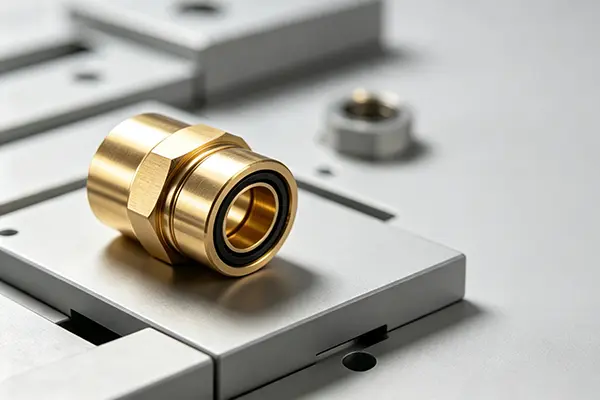
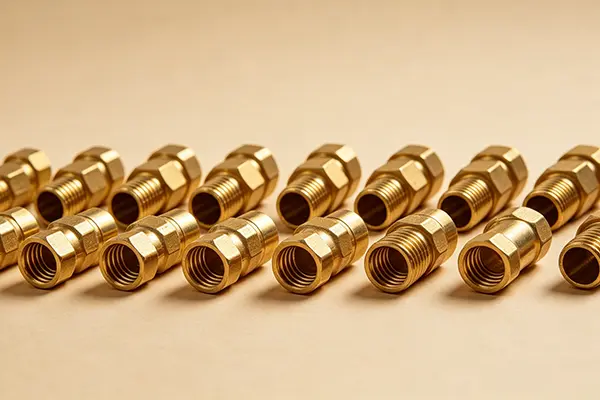
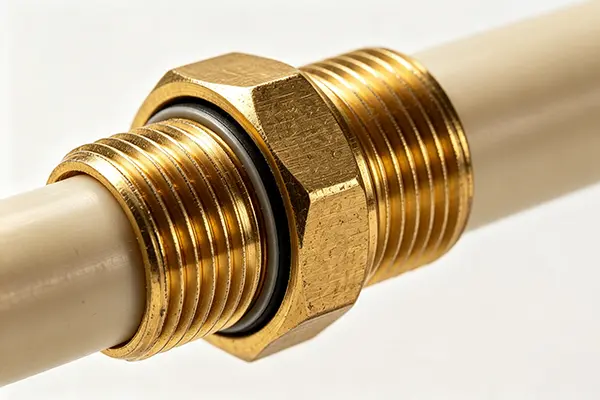
Our comprehensive product portfolio includes a wide range of brass rods (including low-lead and lead-free grades), brass fittings, and pipe components, engineered for exceptional mechanical strength, corrosion resistance, and machinability across plumbing, HVAC, automotive, and industrial applications.
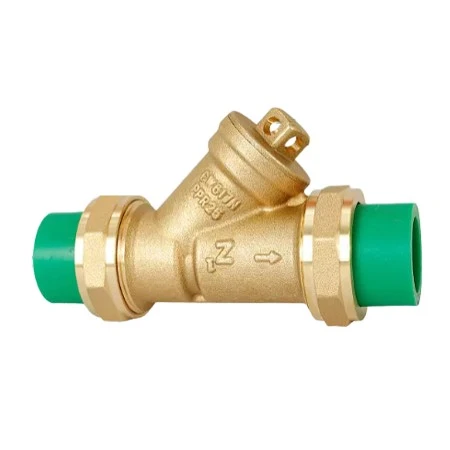
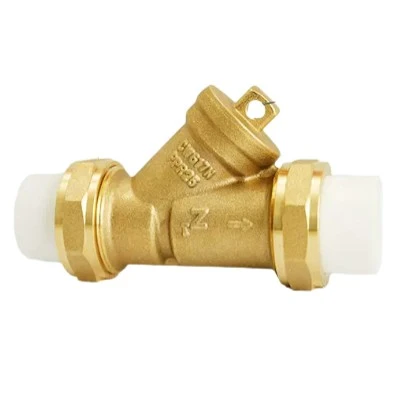
Brass Y-Type Filter Male Thread Connector
NINGXING Brass Y-Type Filter Male Thread Connector combines a threaded pipe connection with a removable stainless steel filter screen. Its forged brass body provides strength and dimensional stability, while the screen captures sand, rust, welding residue, scale, and other solid particles before they reach valves, meters, pumps, heat exchangers, or control equipment.
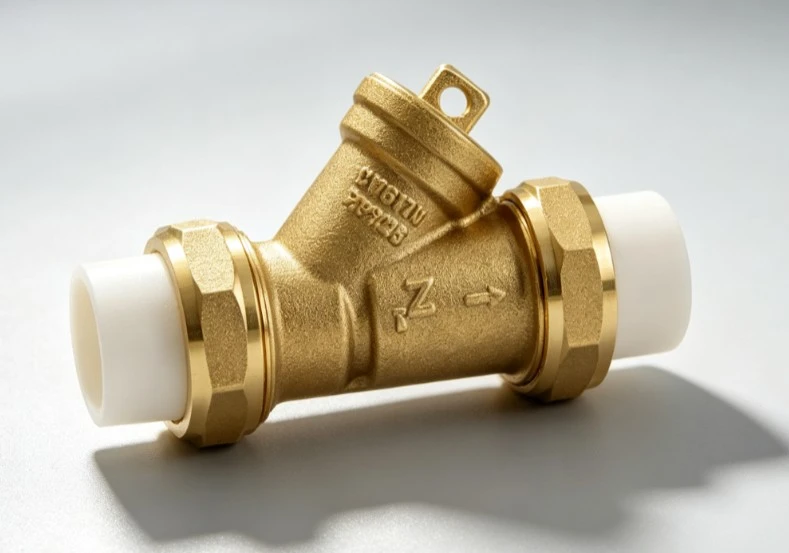
The Brass Y-Type Filter Male Thread Connector is commonly installed before pressure-reducing valves, relief valves, water meters, pumps, heating equipment, control valves, and other components sensitive to contamination. For effective debris collection, the filter chamber should generally face downward or slightly downward. The flow direction must follow the arrow marked on the body.
Fluid enters through the main passage and flows through the stainless steel screen. Solid particles remain in the angled filter chamber, while the filtered medium continues toward the outlet. The Y-shaped design keeps the filter chamber separate from the main flow path and allows convenient screen removal.
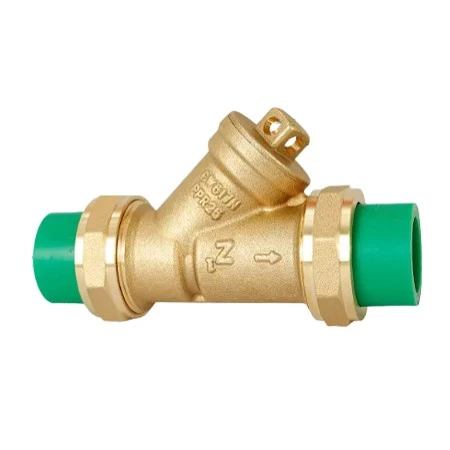
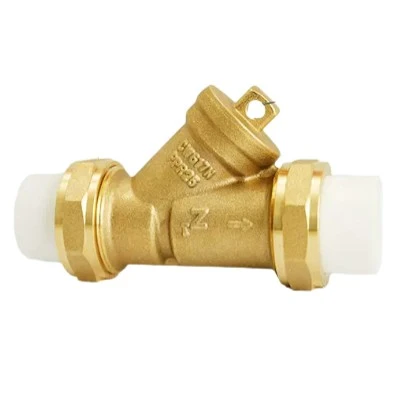
Filter Screen
The standard screen is made from AISI 304 stainless steel and can be removed for cleaning. Different mesh sizes are available according to the medium, particle size, flow rate, and allowable pressure drop.
Typical reference ranges include 18–30 mesh for water, 40–100 mesh for gas, and 100–480 mesh for oil. The standard configuration is commonly supplied with a 20-mesh screen.
A finer mesh captures smaller particles but may increase pressure drop as debris accumulates. A larger mesh provides higher flow capacity but allows smaller particles to pass through. Selection should therefore consider downstream equipment protection and maintenance frequency.
Connection and Sealing
The male-threaded end connects with female-threaded valves, pipes, manifolds, pumps, or equipment ports. Available thread standards include ISO 228 parallel threads, BSPT tapered threads, and NPT threads. These standards are not interchangeable and must be confirmed before production.
Parallel threads may require a gasket, washer, or O-ring, while tapered threads generally use PTFE tape or liquid sealant. Sealant should be applied in a controlled amount to prevent contamination or blockage inside the pipeline.
The Brass Y-Type Filter Male Thread Connector can be supplied with the thread standard required by the destination market, helping buyers match existing female-threaded components and reduce installation changes.
Material and Manufacturing
The body and cover are produced from forged brass. Hot forging helps create a dense structure with good resistance to pressure, impact, and deformation. Available brass grades may include HPb59-1 or other grades selected according to application and compliance requirements.
After forging, CNC machining forms the threads, sealing surfaces, filter chamber, wrench flats, and other functional areas. Thread gauges and dimensional inspection equipment are used to verify production consistency.
Surface options include natural brass, polished brass, nickel plating, chrome plating, and other agreed finishes. Plated surfaces can improve oxidation resistance and provide a more uniform appearance.
For drinking-water or regulated projects, lead-free brass or dezincification-resistant brass should be confirmed separately.
Maintenance
The cleaning interval depends on water quality, particle concentration, flow rate, and equipment sensitivity. The screen should be checked during the first week of operation because installation debris may accumulate quickly. After that, inspection every three months can be used as a general reference.
Before removing the cover, close the upstream and downstream valves and release internal pressure. Remove the screen, rinse it with clean water or a suitable cleaning solution, and inspect it for deformation or damage. Check the gasket or O-ring before reinstalling the screen and cover, then perform a leakage test.
Shut-off valves on both sides of the filter can make maintenance easier.
Application Cases
Commercial Building Water Supply
A commercial complex installed the filter after the incoming water meter to remove sand, rust, and other particles from the municipal supply. After six months, the screen had collected a significant amount of debris, while the downstream pressure-reducing valve and water meter continued to operate normally.
The property management team reported that pipeline maintenance frequency was reduced by approximately 80%.
Industrial Cooling Circulation Water
A manufacturing plant experienced repeated shutdowns caused by welding residue, metal fragments, and other particles blocking pumps and heat exchangers.
After installation, the screen intercepted the contaminants before they reached the equipment. Continuous operating time increased from approximately three months to more than twelve months, reducing maintenance costs and production interruptions.
Residential Heating Systems
In underfloor heating and radiator systems, rust and scale can reduce heat transfer and cause uneven heating. Installing the filter at the heating boiler outlet helps capture particles before they enter the heating circuit.
Depending on water quality, the screen can generally be cleaned every three to six months.
Size Selection
Select the size according to the female-threaded connection, pipe diameter, required flow rate, and available maintenance space. Nominal size alone does not confirm compatibility, especially when different thread standards are used.
The following dimensions are common BSP-style references. Final production dimensions should follow the approved drawing and thread standard.
| Size | Alias | Nominal Thread Size | Major Diameter (mm) | Minor Diameter (mm) | Thread Pitch (mm) |
|---|---|---|---|---|---|
| 1/8 inch | DN6 | G1/8 | 9.728 | 8.566 | 0.907 |
| 1/4 inch | DN8 | G1/4 | 13.157 | 11.455 | 1.337 |
| 3/8 inch | DN10 | G3/8 | 16.662 | 14.950 | 1.337 |
| 1/2 inch | DN15 | G1/2 | 20.955 | 18.631 | 1.814 |
| 3/4 inch | DN20 | G3/4 | 26.441 | 24.117 | 1.814 |
| 1 inch | DN25 | G1" | 33.249 | 30.291 | 2.309 |
| 1-1/4 inch | DN32 | G1-1/4" | 41.910 | 38.952 | 2.309 |
| 1-1/2 inch | DN40 | G1-1/2" | 47.803 | 44.845 | 2.309 |
| 2 inch | DN50 | G2" | 59.614 | 56.656 | 2.309 |
| 2-1/2 inch | DN65 | G2-1/2" | 75.184 | 72.226 | 2.309 |
| 3 inch | DN80 | G3" | 87.884 | 84.926 | 2.309 |
| 4 inch | DN100 | G4" | 113.030 | 110.070 | 2.309 |
Also confirm the filter chamber length, screen diameter, cover clearance, and space required for cleaning.
Technical Parameters
| Parameter | Specification |
|---|---|
| Nominal pressure | PN16, up to 1.6 MPa |
| Working temperature | -20°C to 150°C |
| Suitable media | Water, oil, gas, and non-corrosive fluids |
| Body material | Brass, including HPb59-1 or agreed brass grade |
| Filter material | Stainless steel AISI 304 |
| Thread standards | ISO 228, BSPT, or NPT |
| Standard mesh | 20 mesh, with customized mesh available |
| Connection type | Male-threaded pipeline connection |
| Surface options | Natural, polished, nickel-plated, chrome-plated, or customized |
The actual system limit is determined by the lowest-rated component, including the pipe, seal, filter, valve, and connected equipment.
Installation Requirements
Flush the pipeline before installation to remove dirt, sand, metal chips, and construction residue. Confirm the flow arrow and ensure that the filter chamber has enough clearance for removal.
Use the designated wrenching area on the body or cover. Do not apply force to the screen, filter chamber, or thin cover section. After installation, conduct a pressure or leakage test before commissioning.
Gas applications require confirmation of material, sealing method, certification, pressure suitability, and local regulatory compliance. Water-rated configurations should not be used for gas without approval.
Standards and Quality Inspection
NINGXING operates under an ISO 9001:2015 quality management system. CE and RoHS certification support, material certificates, inspection reports, pressure-test records, and dimensional reports can be discussed according to project requirements.
Quality inspection may include brass material verification, forging inspection, CNC dimensional checks, thread gauging, screen inspection, surface-treatment inspection, pressure testing, and leakage testing.
For drinking-water, gas, or other regulated applications, buyers should confirm the required approvals before ordering.
Wholesale and OEM Supply
NINGXING supplies plumbing distributors, valve suppliers, HVAC companies, industrial equipment manufacturers, building-service contractors, and irrigation suppliers.
OEM/ODM options may include body dimensions, thread standards, brass grades, filter mesh, cover design, surface finish, logo marking, packaging, labels, and inspection documents. Samples can be arranged for thread verification, flow testing, cleaning evaluation, pressure testing, and installation checks.
FAQ
What does a Y-type filter do?
It removes solid particles from a flowing medium before they reach downstream equipment. The particles are retained by the removable stainless steel screen.
Can Brass Y-Type Filter Male Thread Connector be installed horizontally or vertically?
Yes, provided the flow direction is correct and the filter chamber is positioned for effective debris collection and maintenance. A downward or slightly downward position is generally preferred.
How often should the screen be cleaned?
Check it during the first week of operation, then inspect it approximately every three months. Systems with high particle loads may require more frequent cleaning.
Which thread standards are available?
ISO 228, BSPT, and NPT versions can be discussed. The required standard must be confirmed because these thread systems are not interchangeable.
Is it suitable for drinking water?
The standard brass grade may not meet every drinking-water regulation. Lead-free brass, dezincification-resistant brass, and applicable approvals should be confirmed for potable-water projects.
Can it be used with gas?
Only after the complete configuration has been reviewed for the intended gas, pressure, sealing method, certification, and local regulations.
What is the maximum pressure?
The standard configuration supports up to PN16, or 1.6 MPa. The actual limit depends on the lowest-rated component in the system.
Is customization available?
Yes. NINGXING can customize sizes, thread standards, brass grades, filter mesh, surface finishes, packaging, logo marking, and non-standard dimensions.
What information is needed for a quotation?
Provide the thread standard, nominal size, medium, pressure, temperature, flow rate, filter mesh, brass grade, surface finish, quantity, packaging requirements, and destination market. Drawings, samples, or installation photographs can help confirm the specification.
Hot Tags: Brass Y-Type Filter Male Thread Connector, Brass Y Strainer with Male Thread, Brass Threaded Y Filter
Related Category
Send Inquiry
Contact Info
-
Address
No. 478, Daijia North Road, Industrial Zone, Changhe Town, Cixi City, Zhejiang Province, China
-
Tel
-
Email
Need brass rods or custom fittings? Send your drawings or samples today. ISO9001 certified, RoHS & PED compliant. Get a fast, professional quote from our expert team. Inquire now!