
Products
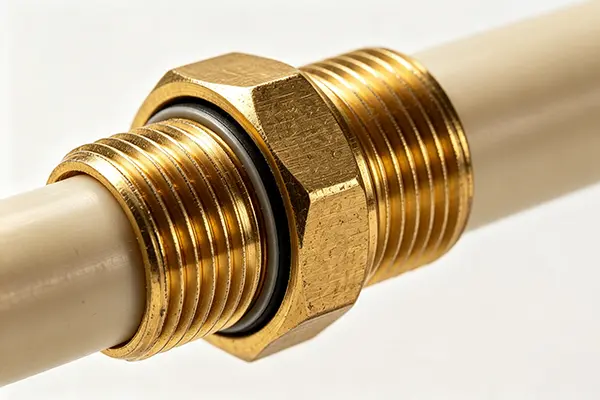
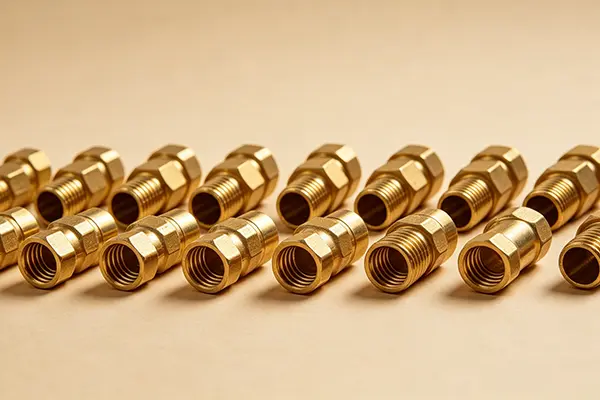
Our comprehensive product portfolio includes a wide range of brass rods (including low-lead and lead-free grades), brass fittings, and pipe components, engineered for exceptional mechanical strength, corrosion resistance, and machinability across plumbing, HVAC, automotive, and industrial applications.
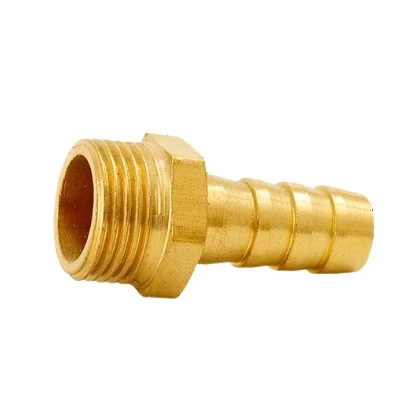
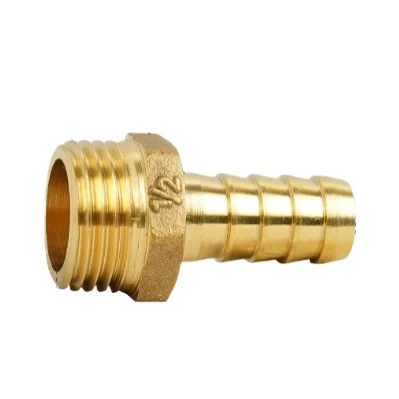
Brass Hose Barb Quick Connector
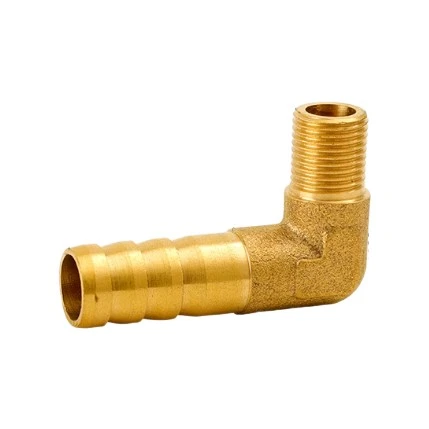
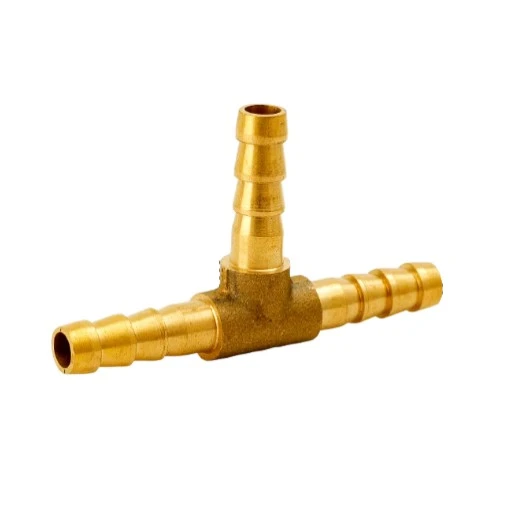
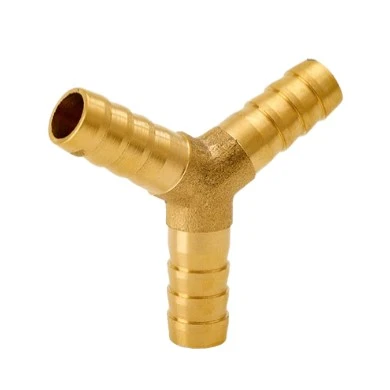
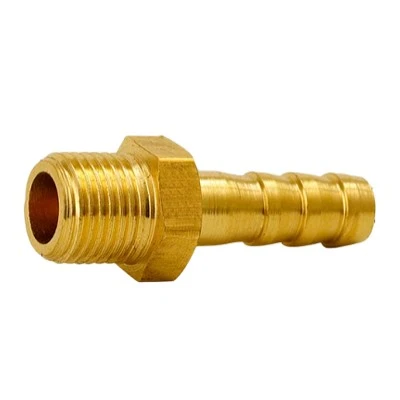
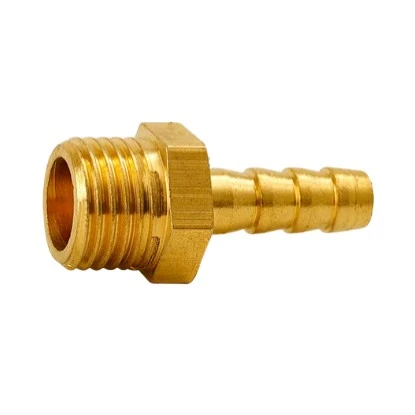
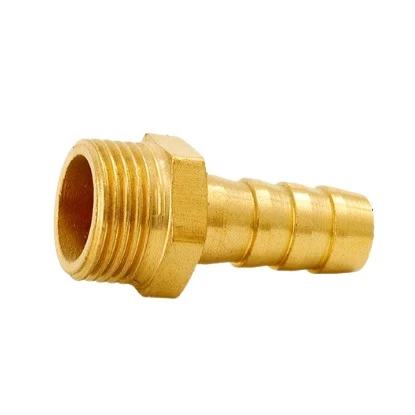
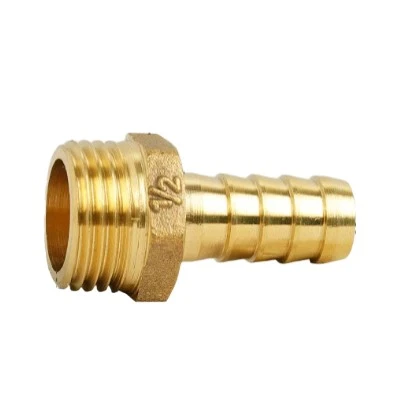
NINGXING Brass Hose Barb Quick Connector is designed for connecting flexible hoses with valves, pumps, tools, and equipment. Its brass body provides mechanical strength and corrosion resistance, while the barb section grips the hose inner wall to improve connection stability. The quick-connect structure allows faster assembly and disconnection than conventional threaded connections.
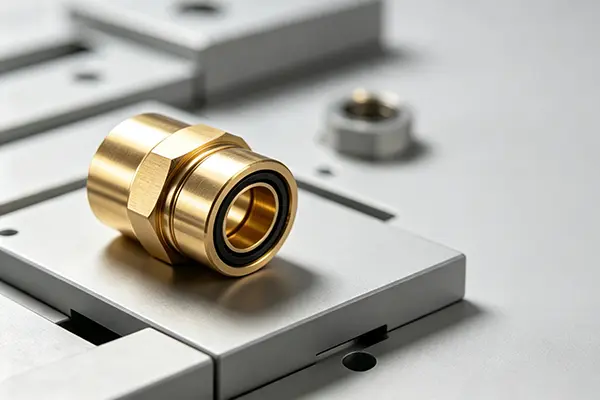
The connector consists of a brass body, hose barb, quick-connect mechanism, sealing elements, and, depending on the model, a threaded or tube connection. The Brass Hose Barb Quick Connector is pushed over the barb, while the quick-connect side mates with a compatible plug or socket for convenient equipment assembly, maintenance, and replacement.
Before ordering, confirm the hose inner diameter, quick-connect profile, thread standard, medium, pressure, temperature, and installation space. Nominal sizes from different manufacturers may not be interchangeable.
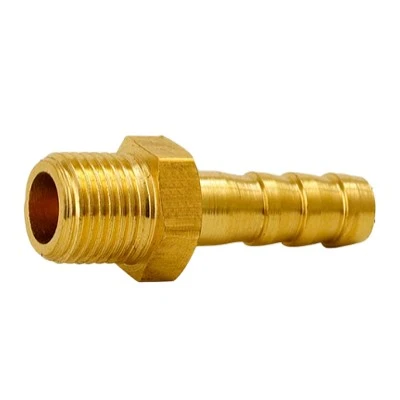
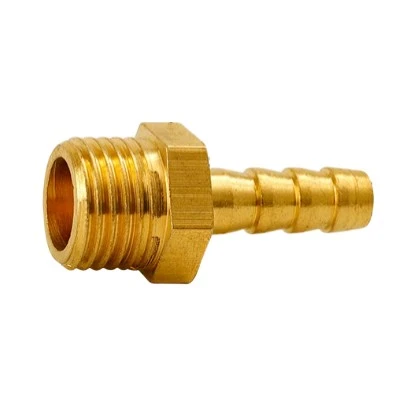
Connection Structure
Hose Barb Design
The barb has raised ridges that engage with the hose inner wall. Connection performance depends on the barb diameter, ridge profile, insertion length, hose material, and surface finish.
The hose should fit tightly without excessive stretching or looseness. For higher-pressure, vibrating, or mobile applications, use a suitable clamp or retaining sleeve. Avoid sharp tools that could damage the hose during installation.
Quick-Connect Mechanism
The quick-connect side uses a locking structure that allows a compatible plug or socket to be inserted and released without removing the hose assembly. Depending on the design, it may include locking balls, sleeves, springs, or internal retainers.
Ensure that the mating component is fully engaged before pressurizing the system. Before disconnection, shut off the supply and release internal pressure to prevent leakage or sudden movement.
Material and Manufacturing
Brass Body
The body can be manufactured from HPb59-1 or another agreed brass grade. For drinking water, gas, fuel, or regulated applications, buyers should confirm whether lead-free brass, dezincification-resistant brass, or specific material approvals are required.
Precision Machining
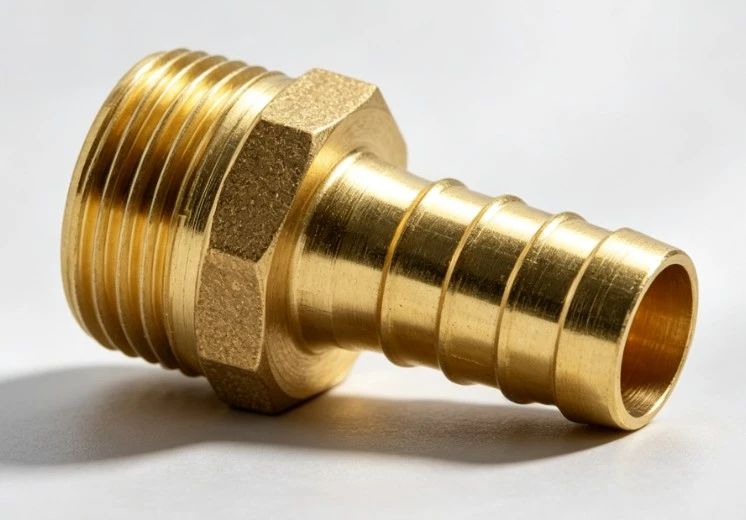
CNC machining forms the barb, quick-connect cavity, threads, sealing surfaces, wrench flats, and internal passage. Controlled machining helps maintain consistent dimensions and supports reliable insertion, retention, sealing, and release performance.
Surface Treatment
Available finishes include natural brass, polished brass, nickel plating, chrome plating, and other agreed treatments. The choice depends on corrosion exposure, appearance, installation location, and cost requirements.
Media Compatibility
The connector may be used with water, compressed air, oil, fuel, vacuum, and other compatible media. Compatibility depends on the complete assembly, including the brass body, hose, O-ring, gasket, quick-connect seal, and thread sealant.
Common seal materials include NBR, EPDM, and FKM. NBR is often used for air and oil, EPDM for water and some heating applications, and FKM for higher-temperature or chemically demanding conditions. Confirm the medium, concentration, temperature, pressure, cleaning chemicals, and service life before production.
Pressure and Temperature
The allowable pressure depends on the connector size, hose, barb engagement, clamp, quick-connect mechanism, seal material, temperature, vibration, and connection orientation. The system limit is determined by the lowest-rated component, not the brass body alone.
For critical applications, complete-assembly pressure testing and application-specific validation should be completed before mass deployment.
Flow Performance
Flow capacity is affected by the internal passage, quick-connect valve structure, hose inner diameter, medium viscosity, and hose routing. A quick connector with a reduced passage may create greater pressure loss than a full-bore threaded fitting of the same nominal size.
For high-flow applications, compare effective flow area, pressure-drop data, air-flow data, or Cv values instead of relying only on the outside size.
Hose Selection
The hose inner diameter must match the barb specification. A loose hose may leak or pull off, while an undersized hose may be difficult to install and could be damaged.
Review the hose material, reinforcement, wall thickness, flexibility, temperature rating, and chemical compatibility together. For moving or vibrating systems, select a flexible hose and use an appropriate retaining method. Avoid sharp bends immediately behind the barb.
Quick-Connect Profile Compatibility
Quick-connect fittings are available in industrial, pneumatic, hydraulic, water, and application-specific profiles. The plug and socket must belong to the same compatible series.
A 1/4-inch or 3/8-inch designation does not guarantee interchangeability. When replacing an existing connector, provide a sample, drawing, product code, or clear photographs. Confirm the plug or socket type, locking sleeve, valve configuration, connection size, sealing method, and interchange standard.
Installation Requirements
Cut the hose squarely and clean the end before installation. Push it fully over the barb to the designed seating position. If a clamp is required, place it behind the final barb ridge without damaging the hose.
For threaded connections, confirm the thread standard and sealing method. ISO 228 parallel threads generally use a gasket, washer, or O-ring, while BSPT and NPT tapered threads commonly use PTFE tape or liquid sealant. Keep sealant away from the internal passage.
Inspect the plug, socket, locking sleeve, and sealing surfaces before connection. Engage the quick-connect mechanism completely, then pressurize the system gradually and check for leakage, hose movement, incomplete locking, and abnormal pressure loss.
Maintenance and Service
Inspect the connector regularly for leakage, corrosion, damaged seals, hose hardening, barb movement, and locking-mechanism wear. Systems exposed to vibration, chemicals, outdoor conditions, or frequent connection cycles may require shorter inspection intervals.
Before disconnection, shut off the supply and release internal pressure. Clean the mating surfaces before reconnection. If the mechanism becomes difficult to operate, inspect the plug, socket, sleeve, locking components, and seals instead of forcing the connection.
Application Cases
Pneumatic Equipment and Air Tools
A factory used flexible polyurethane hoses to connect air tools, control panels, and portable pneumatic equipment. Conventional threaded connections required tools and increased maintenance time when equipment was moved or replaced.
After installing brass hose barb quick connectors, operators could disconnect and reconnect air lines more efficiently. The final configuration was selected according to air pressure, hose inner diameter, flow requirement, and quick-connect profile.
Water Pump and Irrigation Lines
A landscaping contractor needed a removable connection between a portable water pump and flexible irrigation hoses. The system required frequent assembly and disassembly during seasonal relocation and equipment cleaning.
The connector allowed the pump line to be separated without rotating the entire hose assembly. A suitable clamp improved hose retention, while the connector size was matched to the hose inner diameter and pump outlet.
Oil and Fuel Transfer Equipment
A maintenance company used flexible hoses to transfer compatible oil between storage containers and service equipment. The hose assemblies needed regular removal for cleaning and replacement.
A connector with an oil-compatible seal and suitable quick-connect profile reduced handling time while maintaining a compact connection. For fuel or flammable media, the complete assembly must be reviewed for chemical compatibility, pressure, static control, certification, and local safety requirements.
Size Selection
Select the connector according to the hose inner diameter, quick-connect size, threaded interface, flow requirement, and installation space. Hose size and thread size are separate specifications.
The following dimensions are common BSP-style references for threaded versions. Final dimensions should follow the approved drawing, thread standard, and quick-connect profile.
| Size | Alias | Nominal Thread Size | Major Diameter (mm) | Minor Diameter (mm) | Thread Pitch (mm) |
|---|---|---|---|---|---|
| 1/8 inch | DN6 | G1/8 | 9.728 | 8.566 | 0.907 |
| 1/4 inch | DN8 | G1/4 | 13.157 | 11.455 | 1.337 |
| 3/8 inch | DN10 | G3/8 | 16.662 | 14.950 | 1.337 |
| 1/2 inch | DN15 | G1/2 | 20.955 | 18.631 | 1.814 |
| 3/4 inch | DN20 | G3/4 | 26.441 | 24.117 | 1.814 |
| 1 inch | DN25 | G1" | 33.249 | 30.291 | 2.309 |
| 1-1/4 inch | DN32 | G1-1/4" | 41.910 | 38.952 | 2.309 |
| 1-1/2 inch | DN40 | G1-1/2" | 47.803 | 44.845 | 2.309 |
| 2 inch | DN50 | G2" | 59.614 | 56.656 | 2.309 |
| 2-1/2 inch | DN65 | G2-1/2" | 75.184 | 72.226 | 2.309 |
| 3 inch | DN80 | G3" | 87.884 | 84.926 | 2.309 |
| 4 inch | DN100 | G4" | 113.030 | 110.070 | 2.309 |
For quotation, also provide the hose inner diameter, hose outer diameter, barb length, quick-connect profile, plug or socket type, thread standard, medium, pressure, temperature, flow rate, and required seal material.
Technical Parameters
| Parameter | Specification |
|---|---|
| Product type | Brass hose barb quick connector |
| Body material | Brass, including HPb59-1 or agreed brass grade |
| Suitable media | Water, air, oil, fuel, and compatible fluids |
| Connection type | Hose barb with quick-connect or threaded interface |
| Seal options | NBR, EPDM, FKM, or agreed elastomer |
| Thread standards | ISO 228, BSPT, NPT, or customized |
| Quick-connect type | Industrial, pneumatic, hydraulic, or agreed profile |
| Hose compatibility | PVC, PU, rubber, silicone, nylon, or reinforced hose |
| Surface options | Natural, polished, nickel-plated, chrome-plated, or customized |
| Retention method | Hose friction fit, clamp, sleeve, or agreed method |
Quality and Documentation
NINGXING operates under an ISO 9001:2015 quality management system. Inspection may include material verification, CNC dimensional checks, barb and thread measurement, quick-connect engagement testing, seal inspection, surface-treatment inspection, pressure testing, leakage testing, and connection-cycle testing.
Material certificates, dimensional reports, pressure-test records, seal information, CE support, and RoHS support can be discussed according to project requirements. Regulated applications such as drinking water, gas, fuel, medical equipment, and food processing may require additional approvals.
FAQ
What is a brass hose barb quick connector used for?
It connects flexible hoses to equipment, valves, pumps, tools, and pipelines while allowing the quick-connect side to be attached or removed efficiently.
Does the hose require a clamp?
A clamp may be required depending on pressure, hose material, vibration, temperature, and safety requirements. The complete assembly should be evaluated before use.
How do I choose the correct size?
Match the barb diameter to the hose inner diameter, then confirm the quick-connect profile, threaded interface, flow requirement, and medium. Thread size alone does not confirm hose compatibility.
Are all quick-connect fittings interchangeable?
No. Profiles, locking mechanisms, valve structures, and dimensions vary between manufacturers and product series. The plug and socket must be compatible.
Can it be used with compressed air?
Yes, when the connector, hose, seal, and quick-connect profile meet the required pressure, temperature, and flow conditions. The connection must be fully locked before operation.
Can it be used with oil or fuel?
It may be suitable when the brass body, hose, seal, and quick-connect design are compatible with the specific medium. Fuel applications also require review of static control, certification, and local safety requirements.
What seal materials are available?
Common options include NBR, EPDM, and FKM. Selection depends on the medium, temperature, pressure, and chemical exposure.
What is the maximum pressure?
The maximum pressure is determined by the lowest-rated component in the complete assembly, including the hose, barb, clamp, quick-connect mechanism, seal, thread, and mating equipment.
Is customization available?
Yes. NINGXING can customize barb dimensions, quick-connect profiles, threaded interfaces, brass grades, seal materials, surface finishes, packaging, logo marking, and non-standard body designs.
What information is needed for a quotation?
Provide the hose inner diameter and material, quick-connect profile, plug or socket type, thread standard, medium, pressure, temperature, flow rate, seal material, quantity, surface finish, packaging requirements, and destination market.
Hot Tags: Brass Hose Barb Quick Connector, Brass Quick Connect Hose Fitting, Hose Barb Quick Connector
Related Category
Send Inquiry
Contact Info
-
Address
No. 478, Daijia North Road, Industrial Zone, Changhe Town, Cixi City, Zhejiang Province, China
-
Tel
-
Email
Need brass rods or custom fittings? Send your drawings or samples today. ISO9001 certified, RoHS & PED compliant. Get a fast, professional quote from our expert team. Inquire now!